In nineteenth century Canada, religion was a very
important institutional and social force and via its social networks affected
employment opportunities and ultimately income. Via
both direct and indirect effects, religious affiliation invariably affected
asset accumulation and wealth and by extension must also have affected wealth inequality. Indeed, when it comes
to examining the wealth distribution of Anglicans versus Baptists or
Methodists, the Baptists and Methodists appear to have had their wealth more equally distributed.
I have been exploring nineteenth century wealth inequality
and working on papers for upcoming conferences and the relationship between
religious affiliation and wealth distribution in late nineteenth century
Ontario has caught my interest. Work on
religion and wealth has certainly been done for the modern era especially for
the United States (see Keister reference below). My data is a set of
census-linked probated decedents from the years 1892 and 1902 that has data on
socio-economic characteristics (age, occupation religion, birthplace) as well
as wealth data. I have been working on
this type of data nearly my whole academic career.
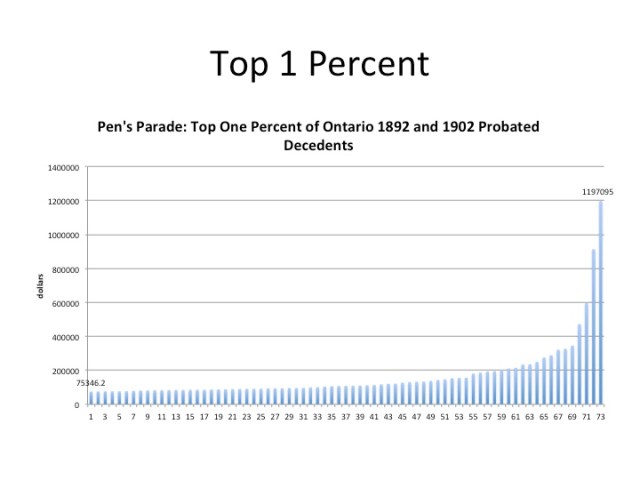
Figure 1 presents a Pen’s Parade of the top
1% of these 7,516 probated decedent wealth holders (3515 from 1892 and 3,641
from 1902) and shows that their wealth
ranged from 75,346 dollars to a high of 1.2 million dollars. Average wealth in this entire data set was
$6,871 with the top 1% averaging $169,415. Yet, compared to other jurisdictions around the world in the late
nineteenth and early twentieth centuries, Ontario’s wealth distribution appears
to have been more egalitarian.
FIGURE 1
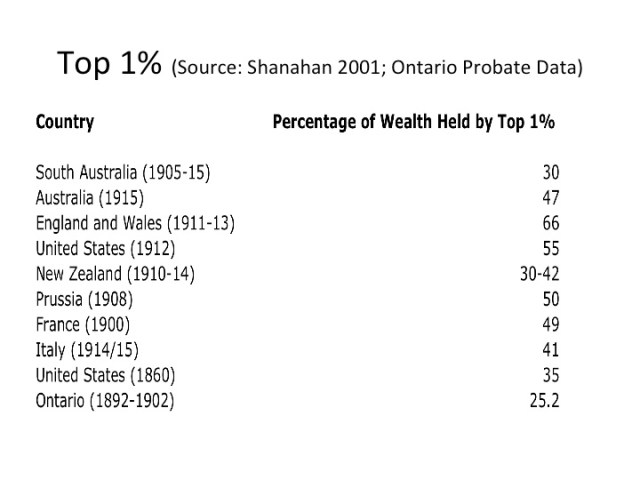
The top 1% of wealth holders in Ontario in 1892 and 1902
held about 25 percent of total wealth.
Compare this to other parts of the world as shown in Figure 2 and it
can be seen that Ontario seems to stand out as not being as unequal as other
parts of the world when it came to wealth. Compared to the United States, Britain or even new settler economies
such as Australia, Ontario seems curiously bereft of larger
supercharged estates more characteristic of the Age of the Robber Barons. Why Ontario (and maybe by extension Canada) is
not as unequal in its wealth distribution as other parts of the world during
this time is a question I have been trying to find answers to.
FIGURE 2
The second dimension of this research I have been pursuing
is differences in wealth distribution amongst the major religious groups during
the late nineteenth century. In terms of
their share of the data, Methodists were the largest denomination at 29 percent of the
data set followed by Presbyterians at 27 percent, Anglicans at 19 percent,
Roman Catholics at just over 11 percent and Baptists at 5 percent. The remainder are an assortment of all other
religions.
FIGURE 3
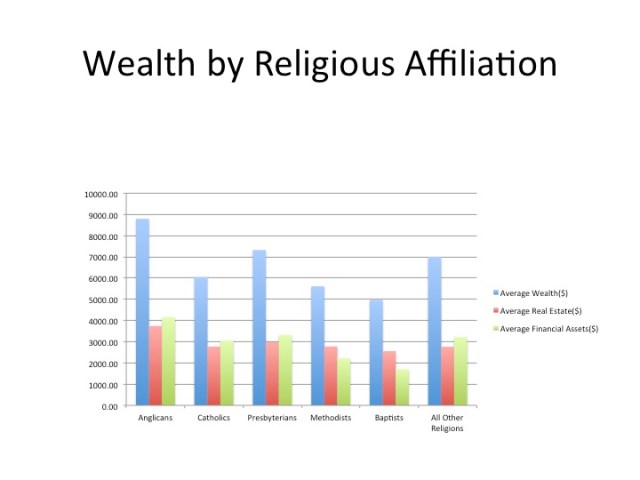
FIGURE 4
There are certainly differences in average wealth with
Anglicans and Presbyterians having the highest average wealth and Baptists and
Methodists the lowest (See Figure 3).
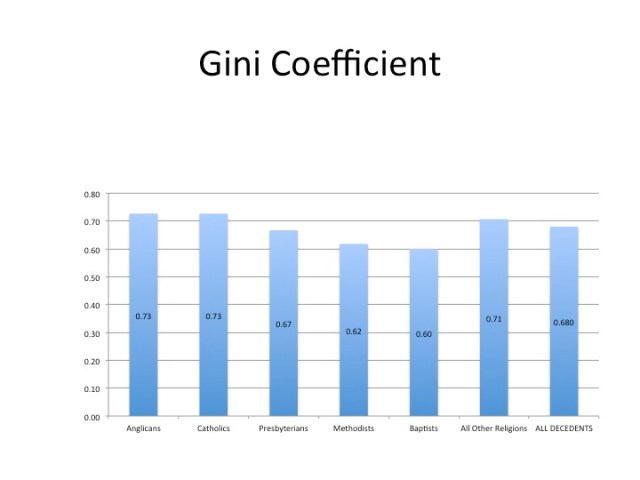
More interesting is that as evidenced by Gini coefficients (see Figure
4) wealth was more unequally held amongst Anglicans and Roman Catholics and
less so amongst Methodists and Baptists.
So again, my question is why?
Anglicans were the establishment church in 19th century
Ontario and some of their members benefitted by land grants early on so that
might explain why their wealth was unequally held. What about Roman Catholics? What is it about Baptists and Methodists that
might explain lower average wealth and greater wealth inequality? Did religious belief affect the tolerance for inequality within a particular faith and if so what was the specific belief? Were there
differences in tithing practices? Portfolio
allocation choices? How about
intergenerational wealth transmission?
Was one group more likely to favour equal estate division over
primogeniture? I am still looking
for the answers.
References
Keister, L. (2008) Faith and Money:
How Religion Contributes to Wealth and Poverty. Cambridge University Press.
Ohlsson, H.,J.
Roine and D. Waldenstrom (2008), ‘Long-run changes in the concentration of
wealth: An overview of recent findings’, in: Personal Wealth from a Global
Perspective, ed. by J.B. Davis, (Oxford: Oxford University Press).
Shanahan M.P., (2001) “Personal wealth in South Australia”,
Journal of Interdisciplinary History , XXXII:I (Summer): 55-80.
// <![CDATA[
// <![CDATA[
// &lt;![CDATA[
// &amp;lt;![CDATA[
// &amp;amp;lt;![CDATA[
// &amp;amp;amp;lt;![CDATA[
// &amp;amp;amp;amp;lt;![CDATA[
// &amp;amp;amp;amp;amp;lt;![CDATA[
// &amp;amp;amp;amp;amp;amp;lt;![CDATA[
// &amp;amp;amp;amp;amp;amp;amp;lt;![CDATA[
// &amp;amp;amp;amp;amp;amp;amp;amp;lt;![CDATA[
// &amp;amp;amp;amp;amp;amp;amp;amp;amp;lt;![CDATA[
var sc_project=9080807;
var sc_invisible=1;
var sc_security=&amp;amp;amp;amp;amp;amp;amp;amp;amp;quot;4a5335bf&amp;amp;amp;amp;amp;amp;amp;amp;amp;quot;;
var scJsHost = ((&amp;amp;amp;amp;amp;amp;amp;amp;amp;quot;https:&amp;amp;amp;amp;amp;amp;amp;amp;amp;quot; == document.location.protocol) ?
&amp;amp;amp;amp;amp;amp;amp;amp;amp;quot;https://secure.&amp;amp;amp;amp;amp;amp;amp;amp;amp;quot; : &amp;amp;amp;amp;amp;amp;amp;amp;amp;quot;http://www.&amp;amp;amp;amp;amp;amp;amp;amp;amp;quot;);
document.write(&amp;amp;amp;amp;amp;amp;amp;amp;amp;quot;&amp;amp;amp;amp;amp;amp;amp;amp;amp;lt;sc&amp;amp;amp;amp;amp;amp;amp;amp;amp;quot;+&amp;amp;amp;amp;amp;amp;amp;amp;amp;quot;ript type=&amp;amp;amp;amp;amp;amp;amp;amp;amp;#39;text/javascript&amp;amp;amp;amp;amp;amp;amp;amp;amp;#39; src=&amp;amp;amp;amp;amp;amp;amp;amp;amp;#39;&amp;amp;amp;amp;amp;amp;amp;amp;amp;quot; +
scJsHost+
&amp;amp;amp;amp;amp;amp;amp;amp;amp;quot;statcounter.com/counter/counter.js&amp;amp;amp;amp;amp;amp;amp;amp;amp;#39;&amp;amp;amp;amp;amp;amp;amp;amp;amp;gt;&amp;amp;amp;amp;amp;amp;amp;amp;amp;lt;/&amp;amp;amp;amp;amp;amp;amp;amp;amp;quot;+&amp;amp;amp;amp;amp;amp;amp;amp;amp;quot;script&amp;amp;amp;amp;amp;amp;amp;amp;amp;gt;&amp;amp;amp;amp;amp;amp;amp;amp;amp;quot;);
// ]]&amp;amp;amp;amp;amp;amp;amp;amp;amp;gt;
// ]]&amp;amp;amp;amp;amp;amp;amp;amp;gt;
// ]]&amp;amp;amp;amp;amp;amp;amp;gt;
// ]]&amp;amp;amp;amp;amp;amp;gt;
// ]]&amp;amp;amp;amp;amp;gt;
// ]]&amp;amp;amp;amp;gt;
// ]]&amp;amp;amp;gt;
// ]]&amp;amp;gt;
// ]]&amp;gt;
// ]]&gt;
// ]]>
// ]]>


 Worthwhile Canadian Initiative
What is it about Baptists and Methodists that might explain lower average wealth and greater wealth inequality?
Frankly, these were the “grittier” denominations. Insofar as class tended to correspond with religion, the Presbyterians (Scots) and Anglicans (English) were higher-class than the more popular and vulgar Methodists and Baptists. The Methodists famously (or infamously) built churches in every nook and cranny in the countryside, attracting local farmers. This is particularly notable in the Bay of Quinte Tract, the old Second Circuit, and on the Niagara Peninsula, the old First Circuit.
The United Church in these areas has been overburdened with churches to population forever. There is one charge I used to attend in the Bay of Quinte area that had three ex-Methodist places for a population of 4,000. With modern roads and automobiles, this is untenable.
In Canadian cities in the 19th century, the business class tended to be Presbyterian, except for Toronto, in which it was Methodist. The Eatons were Methodist and still are United Church.
The lack of inequality in Ontario is partially explained by the fact that Toronto was still playing second fiddle to Montreal. Montreal was where the real wealth was, half the banks and insurers and all of the railways were based there. The Golden Square Mile was where Canada’s wealthy lived, latter moving to Westmount and Mount Royal. Toronto was still smaller, definitely poorer and grittier than Montreal. It wouldn’t reach equality until the 1930’s and wouldn’t overtake Montreal until the 1970’s.
Determinant: Thanks for the point about Montreal.
As usual, thanks to Determinant.
For RC: there was a wealthy French entrepreneurial bourgeoisie: Dupuis and Paquet in retail, the Brillant in telephone,Forget in railways, Barsalou, Catelli and Gattuso in food. ( The first Italian immigration wave assimilated with other Catholics begore the postWW11 went anglo and their children became Bill 101 babies…)
Not as wealthy as their anglo counterparts,but the technical-medical0judicial middle-class was smaller and the wage inequality was immense. (Pierre Fortin showed that while an African earned only 54% of white wage in 1960, a QC franco would get 52% of a anglo.)
A good overview is in
ROY, Fernande, Progrès, harmonie, liberté : le libéralisme des milieux d’affaires
francophones à Montréal au tournant du siècle. Montréal, Boréal, 1988. 301 p.
Click to access 304776ar.pdf
Merci for the Roy reference Jacques.
Interesting stuff Livio.
A very crude model. Suppose the distribution of wealth is skewed right. Assume there are 10 religions. Assume the poorest decile join religion1, the second poorest decile join religion2,… and the richest decile join religion10. I think (not sure) that would mean religion1 would have the smallest Gini, religion2 the second smallest Gini,… and religion10 the biggest Gini.
Nick: Interesting point. This would mean that wealth level is influencing religious choice rather than religion influencing wealth. Empirically that could mean being wealthy would make individuals decide to be Anglican whereas being poor would predispose them to Methodism. Will have to think about that.
Livio – the religion as a function of wealth story describes my paternal grandfather pretty accurately, if I remember the stories I’ve been told correctly, and they’re true. On the other hand, some of my more distant relations (e.g. this one) attribute their personal and professional success in part to Methodism. So who knows.
In India IIRC some of the converts to Christianity were from the lower castes, who were able to shed some of their low-caste status by changing religion (and then found themselves on the wrong side of all the post-independence policies introduced to help the scheduled castes).
There are two axes at play here: Wealth and “Tribe”, for want of a better word.
Roman Catholics function purely as a tribe, if you were French you were Catholic, no matter how rich you were. The same went for the “Green” Catholic Irish.
On the Protestant side, wealth was a cofactor with tribe. Rich Scots were Presbyterian; Rich English were mostly Anglican with a few Methodists, the Protestant Orange Irish could be Methodist, Presbyterian or Anglican. The Eatons were Methodist and were proudly Irish.
The Baptists had their wealth too, notably the McMasters and a few others.
The United Church merger in 1925 obliterated the wealth factor. Each protestant church was now as socially respectable as the others and had an equal spread of wealth and social networks. Notably, each had their own network of affiliated universities.
(Pierre Fortin showed that while an African earned only 54% of white wage in 1960, a QC franco would get 52% of a anglo.)
That maybe a fact, but it’s a nonsensical context. Prior to 1960 the black community in Canada was very, very small. There were a few blacks in Ontario who were mainly descendents of escaped American slaves and some American immigrants who worked as railway porters. The same goes for Montreal where Union United Church was build as a Congregational Church by Pullman porters. The largest black community in Canada was in Nova Scotia, again descendents of escaped slaves from the Revolutionary War.
Frankly, the black community in Canada did not and could not have the same economic role as in the US simply due to numbers. In Canada cheap labour was white, and in Quebec it was French and White.
( The first Italian immigration wave assimilated with other Catholics begore the postWW11 went anglo and their children became Bill 101 babies…)
If you were in the English system in 1977 you stayed there, IIRC, and if your parents went you could go too. So you’re law is a little off, Jacques.
If you immigrated after 1977 you had to go to the French system.
This would mean that wealth level is influencing religious choice rather than religion influencing wealth.
Probably something to that. It’s a little further back in history, but one could see the appeal of the earlier Christian church to the poor (relative to mainstream Roman, or other, religions). No reason to think that what’s true between religions can’t also be true within them.
If you are going to look at equality, particularly from the viewpoint of a social factor such as religion, the share of wealth held by the bottom 10 or 20% is, I think, a better indicator than the share held by the top 1%. Most societies have their super-rich (and the way wealth is measured exaggerates their share). But what most people want is some reasonably secure status and income. And how they measure themselves socially is not by comparison with the super-rich, but with the poorest. So it’s the extent to which the rich press upon the poor that counts. The two roughly go together, but it’s the tails that count.
Frances: you’re correct on the point about dalits (lower-caste) converting to Christianity in India, a phenomenon that happened in other British colonies including HK. Of course in that case it’s not the religion itself, but entry (of a very limited type) into the ruling class culture that facilitates greater wealth. (IIRC the same thing happened in the Roman Empire.) Of course, when those enriched groups later spread into other, non-colonized, parts of Asia, many reverted to their indigenous religions because Christianity did not have any social advantages. You see this with the formerly Christian Chinese who moved to places like Malaysia and Indonesia and reverted to Daoism and Buddhism, and notably did not adopt Islam. So the story there maybe is that the religion of the moneyed group matters more than their religion per se. Which is why all Silicon Valley aspirants ride bicycles….
Determinant: I was pressed for time and coming back home, I realized I typed too fast.
I meant “African americans compared to white americans”. Sorry for the inconvenience…
Bill 101 applied to all school-age children whose parents didn’t study in english in Canada…If you came from Italy as an adult in 1965 and your first child began schooling in 1978, the child had to go to french school.If an older sibling had began studying in english before, then you can ask for sibling exception ( almost always granted). My girlfriend kindergarten class last year was made up of 4 exceptions. They were unilingual franco from reconstituted families. They still have this fall an extra beginners english class so they can speak to the teacher ( herself a franco…)
The number of people caught under that provision would not be large, a 20 year old in 1965 having their first child start school in 1978? In an Italian (Catholic) family? Without siblings?
A immigrant who is 20 in 1974, now that’s a different story.
….a child whose father or mother is a Canadian citizen and who has received or is receiving elementary or secondary instruction in English in Canada (Quebec in earlier versions), and the brothers and sisters of that child, provided that that instruction (in English) constitutes the major part of the elementary or secondary instruction received by the child in Canada.
I checked, Bill 101 wasn’t gratuitous to first-born children. The number of forced moves under Bill 101 was small. Bill 22, the earlier Bourassa act, had more of those because it had language testing.
BTW I would have fallen under that exception because my father attended English schooling in Quebec in the 1950’s, under the 1977-1982 version of the Bill. That’s why the United Church very nearly settled my parents in Quebec; they finally opted for New Brunswick instead.
If you settled in Quebec as an immigrant in 1978, you had to send your kids to French schools, and that was that.